Supplements are not medicines and do not treat or cure medical conditions. Where appropriate, they may form part of a wider nutritional and management programme.
🫁 What is respiratory health?
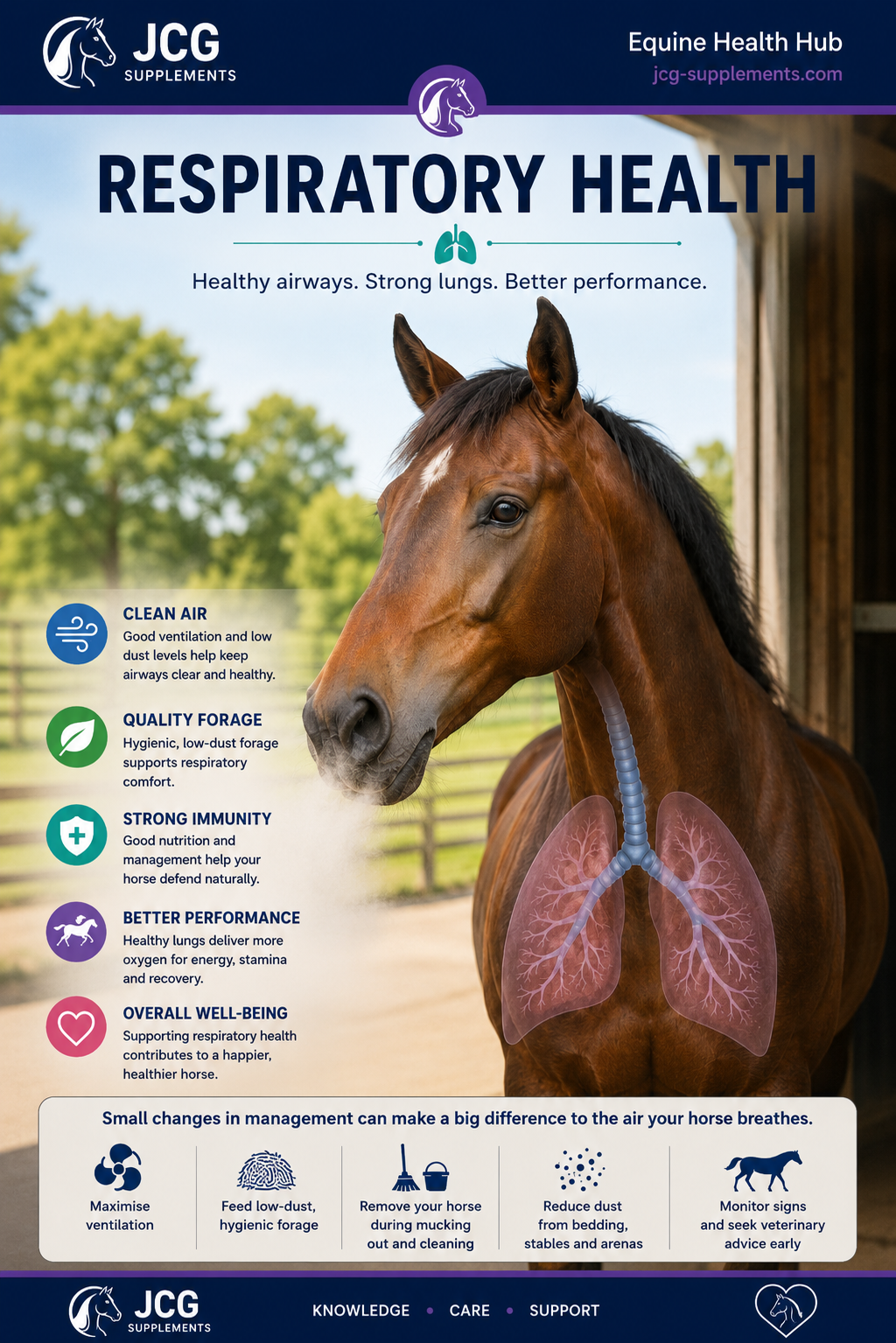
Respiratory health describes the normal function, comfort and resilience of the horse’s respiratory system.
The respiratory system brings oxygen into the body and removes carbon dioxide. Oxygen is needed by every cell and tissue, making healthy breathing essential for wellbeing, movement, recovery and athletic performance.
You may also find these useful
People also asked
My horse coughs at the start of exercise. Should I be concerned?
An occasional cough at the start of exercise is not always a cause for alarm. Some horses may cough once or twice as they clear dust or mucus from their airways, particularly if they have been standing in the stable.
However, a horse that coughs regularly should not be ignored.
A persistent cough can be a sign of an underlying respiratory problem, including:
Dust or irritation from hay, bedding or the stable environment.
Mild airway inflammation.
Equine asthma (formerly known as COPD or RAO in more severe cases).
A viral or bacterial respiratory infection.
Less commonly, other conditions affecting the lungs or upper airway.
You should pay particular attention if your horse also has:
Nasal discharge.
Increased breathing effort or flared nostrils.
Reduced performance or tiring more quickly.
Noisy breathing.
A persistent cough at rest as well as during exercise.
A raised temperature or signs of being unwell.
If the cough continues for more than a few days, becomes more frequent, affects your horse’s performance, or is accompanied by any other signs of illness, your veterinary surgeon should examine your horse. Early diagnosis can help identify the cause and allow appropriate treatment or management before the problem becomes more serious.
Many owners choose to include a respiratory supplement as part of their horse’s daily routine to help support healthy respiratory function, particularly during periods of increased workload, travel or environmental challenge. Used alongside good management practices, they can form a valuable part of a proactive approach to maintaining your horse’s respiratory wellbeing.